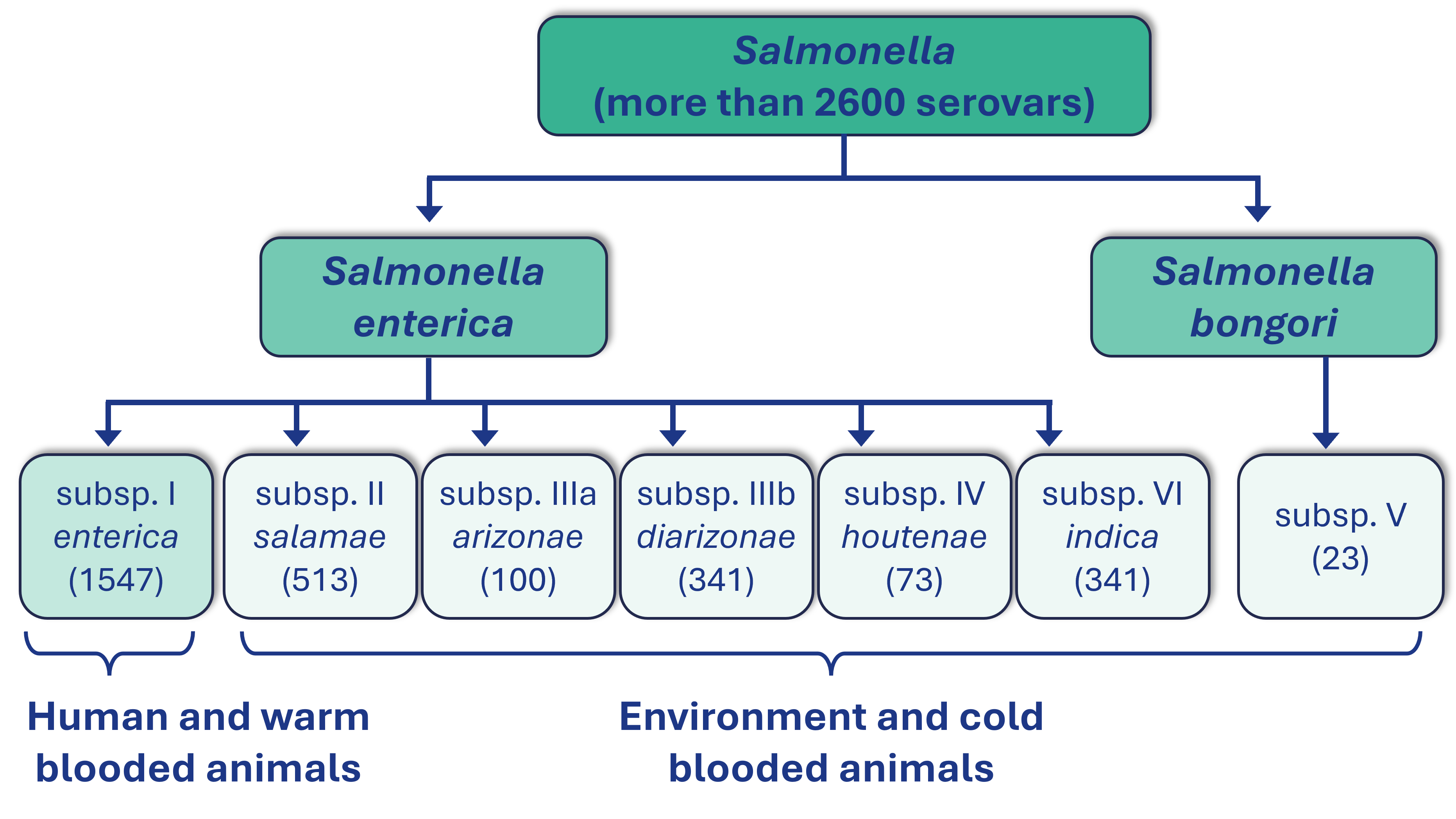









Salmonella classification

Key 1 visual
Classification click Classification 2

Disease

Doctor

Humans

  • Can be asymptomatic or with symptoms such as diarrhoea and other mild symptoms
  • The clinical condition may rarely worsen
  • The most common serovars causing disease in humans are S. Enteritidis, S. Typhimurium, and monophasic S. Typhimurium

Animals

  • Most frequently infected animals are asymptomatic. In this way, Salmonella can spread easily between animals in a herd or flock and enter the food chain without being detected
  • In the EU, national control programmes (NCPs) of Salmonella in the main poultry production sectors have been implemented, combining the census sampling of flocks, the management of the tested-positive flocks and the prevention of flock infections. Certain Member States have also carried out NCPs in pig production sector. The implementation of stringent hygiene all along the food-chain complements the NCPs. (See below and the story map on Salmonella)
  • In some cases, infected animals can develop symptoms such as fever, diarrhoea and abortion, mainly due to specific serovars
  • The most common serovars found in animals are:
    • In poultry species: S. Enteritidis, S. Infantis, and S. Kentucky
    • In pigs: monophasic S. Typhimurium, S. Typhimurium, and S. Derby
    • In cattle: S. Typhimurium and S. Dublin

Humans

Human

Animals

Animals

Ecology of Salmonella

Envt
Envt Conditions Locations Hosts plus plus plus

Transmission routes

Routes of transmission
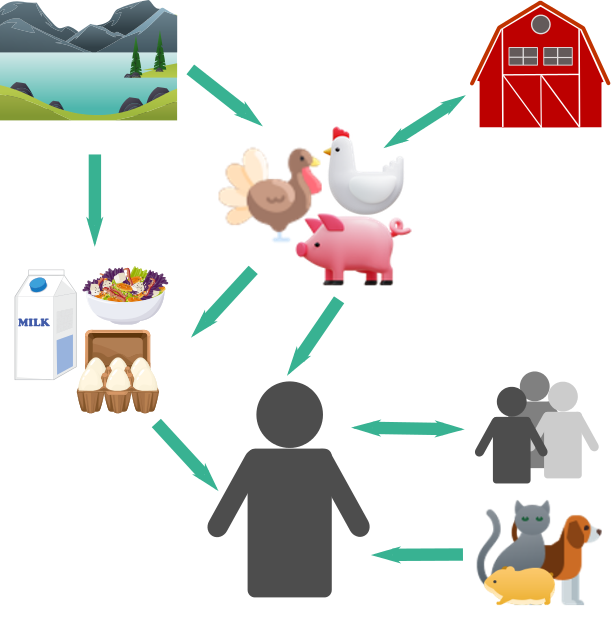
Salmonella contamination to humans occurs through contaminated food, such as:
  • Undercooked meat (mainly poultry and pork)
  • Eggs
  • Fruits and raw vegetables
  • Unpasteurized milk
  • Seafood and ready-to-eat food products
But can also be transmitted via:
  • Direct contact with infected animals
  • Contact with contaminated materials and the contaminated environment
Animals can become infected via:
  • Direct transmission from infected animals
  • Contaminated water, faeces, insects, farm staff or equipment